Depth is what widens the line of impact.
I’ve always been drawn to work that makes dimension visible.
Not in an obvious way. Not through spectacle or scale. But through a kind of quiet architecture—where you can sense that what remains was deliberately shaped to lead into what came next.
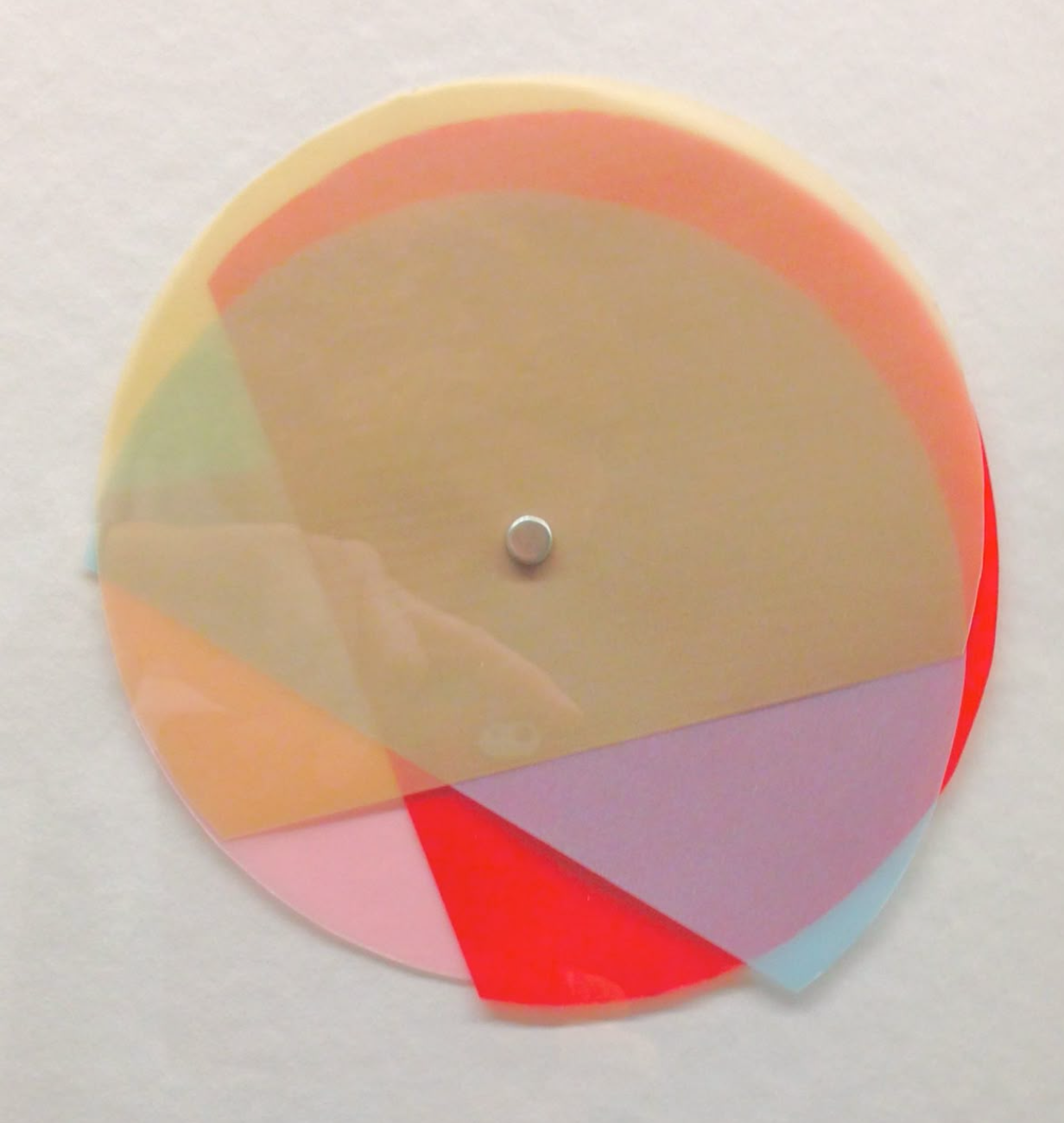
Work shaped through choices that compound. Built with openness to what’s new, rather than urgency. Designed to hold.
Lately, I’ve been thinking about how much this mirrors the way our careers and lives actually unfold. Not as straight lines, but as layered compositions. Built over time. In motion, but anchored. Shaped not just by where we go, but by what we stay rooted in along the way.
There’s a tendency to believe that impact comes from momentum alone—choosing a direction and moving forward decisively. But momentum without depth produces a narrow line. It moves, without carrying far.
When you look closely at people whose work has shaped culture, ideas, institutions, and the ways influence travels, a different pattern emerges. Their impact didn’t come from staying in one role, but from allowing each environment they moved through to form them for the next.
Benjamin Franklin’s life is a clear example.
He began as an apprentice printer, learning the physical craft of setting type, operating presses, and producing written material. He wasn’t formally educated—printing became his classroom. Through that work, he learned to read deeply, think critically, and engage with ideas. The skills he developed in the print shop shaped everything that followed: his writing, his inventions, his civic contributions, and his diplomacy. What looked like a modest starting job became the foundation of broad influence.
Mahatma Gandhi began as a lawyer, uncertain and often unsuccessful early in his practice.
Yet the discipline of law taught him how power operates, how systems enforce norms, and how arguments are constructed. His legal training, paired with lived experience navigating injustice, shaped the moral framework and strategic restraint that later defined his leadership. The courtroom didn’t confine him—it formed him.
Leonardo da Vinci’s path began in workshops, not galleries.
As an apprentice, he learned to grind pigments, study anatomy, and observe the mechanics of everyday objects. That early training cultivated patience, curiosity, and precision. Those habits carried into his later work across art, science, engineering, and design. His breadth wasn’t accidental—it was built through environments that rewarded careful observation and interdisciplinary thinking.
Marie Curie’s career unfolded through movement across roles and disciplines.
She began as a student and teacher, working as a governess to support herself while continuing her studies independently. As she gained access to formal research, she moved between physics and chemistry, applying insights from one field to advance another. Teaching, research, and laboratory leadership each became environments where her thinking evolved. Her work ultimately changed how humanity understands matter itself, earning her two Nobel Prizes in different scientific fields. Her influence widened because she allowed curiosity to carry her across boundaries.
James Baldwin’s early work was shaped by necessity and place.
He wrote while working modest jobs, living abroad, and observing social systems from the margins. Each environment sharpened his voice and deepened his understanding of power, identity, and language. His influence didn’t come from a single role, but from staying with complexity long enough for insight to mature. Depth gave his words reach.
Ursula Burns began her career as a mechanical engineering intern at Xerox.
It was a technical entry point—narrow in scope, specific in skill. But she didn’t treat that role as a place to stay. She treated it as a place to start.
Rather than concentrating in a single function, Burns intentionally moved across the organization—from engineering to operations, from product development to leadership. Each transition expanded a different dimension of her capability: how products are built, how teams scale, how decisions are made, how complex systems function.
What mattered wasn’t that she stayed with one company. It was that she refused to stay one-dimensional.
By seeking out roles that stretched her perspective, she built a working understanding of the business as a whole—not just her part of it. That accumulated fluency positioned her to operate at a broader level of influence, shaping strategy, culture, and direction.
Her career wasn’t defined by a single concentration.
It was defined by intentional expansion.
What connects these lives isn’t prestige or predictability.
It’s accumulation.
Each role, environment, and stretch contributed something essential—skills, perspective, restraint, fluency—that later widened what they were capable of influencing.
I believe deeply in staying open—to who you are becoming and to where your energy might find new expression.
Not because change is always better. But because humans are multi-dimensional, and our work tends to reflect whatever dimensions we allow ourselves to access. When we stay curious—experimenting thoughtfully with new roles, perspectives, or ways of contributing—we don’t abandon what we know. We add to it.
There is real comfort in knowing one thing well. Familiarity reduces friction. It lowers uncertainty. And often, staying in a well-worn lane isn’t a lack of courage—it’s a very human response to how our brains are designed to seek efficiency and ease.
Autopilot exists for a reason.
Stretching, on the other hand, introduces uncertainty. It places us back in a space of learning and formation—where outcomes aren’t guaranteed and competence isn’t immediate. And sometimes, especially when life is full, we choose ease not because we’re limited, but because we’re tired.
Still, over time, it’s experimentation—gentle, intentional, and self-directed—that adds depth. Each new context offers another layer of understanding. Another way of seeing. Another lens through which experience can compound.
That layering doesn’t always change the direction of your path. Often, it simply gives it more width. More weight. More reach.
Your journey is doing more than moving you forward. It’s shaping you.
It isn’t meant to be perfectly linear. And if it were, you’d lose much of the dimensionality that makes you capable of the work you’re here to do. The pivots, the pauses, the stretches that don’t immediately make sense—they all add depth.
Where you thought you were headed and where you find yourself now may feel disconnected. You might even feel momentarily untethered. But that doesn’t mean you’re stagnant, or off course. It means you’re in a place where something new is being formed.
Take where you are as a place to learn. To stretch a different part of yourself. To move forward with an openness that allows opportunity to meet you—not always where you expected, but often where you’re ready.
Depth is what widens the line of impact.
